Certified Kubernetes Administrator (CKA) Certification Guide
Introduction
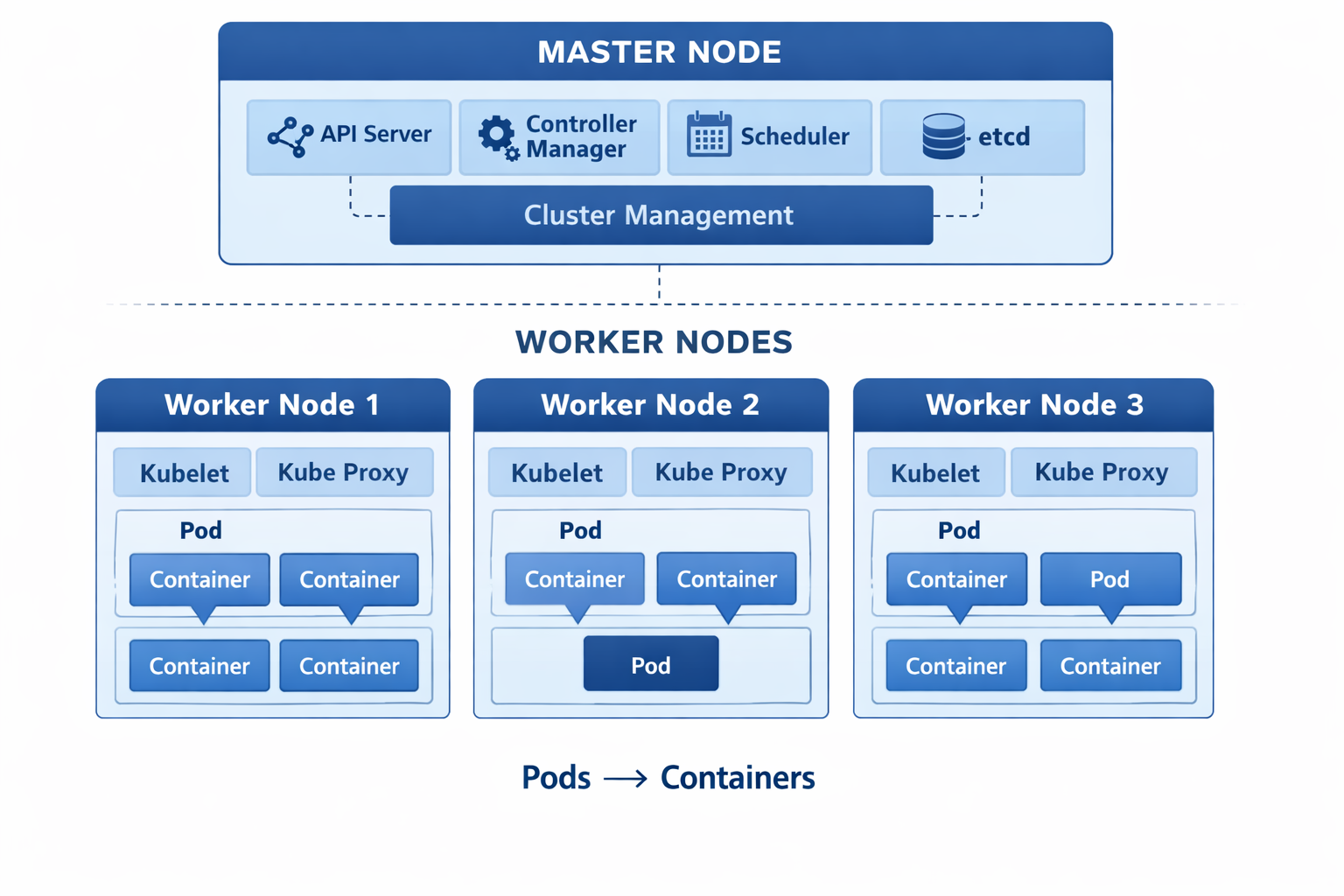
Containerization and cloud-native technologies are rapidly transforming the IT industry. One of the most powerful platforms for managing containerized applications is Kubernetes. As organizations increasingly adopt Kubernetes to manage large-scale workloads, professionals with Kubernetes administration skills are in high demand.
The Certified Kubernetes Administrator (CKA) certification is designed to validate a professional’s ability to manage Kubernetes clusters effectively. Training programs offered by DevOpsSchool help learners build practical knowledge of Kubernetes architecture, deployment strategies, and troubleshooting techniques required in real-world DevOps environments.
What is Kubernetes?
Kubernetes is an open-source container orchestration platform originally developed by Google. It automates the deployment, scaling, and management of containerized applications.
Key capabilities of Kubernetes include:
- Automated deployment of containerized applications
- Load balancing and service discovery
- Automatic scaling based on workload demand
- Self-healing mechanisms for failed containers
- Efficient resource utilization across multiple nodes
Because of these capabilities, Kubernetes has become the backbone of modern cloud-native infrastructure.
What is Certified Kubernetes Administrator (CKA) Certification?
The Certified Kubernetes Administrator (CKA) Certification is an industry-recognized credential that demonstrates a candidate’s ability to configure, manage, and troubleshoot Kubernetes clusters.
The certification focuses on key administrative responsibilities such as:
- Kubernetes cluster setup and configuration
- Workload scheduling and resource management
- Networking and service configuration
- Storage management
- Monitoring and troubleshooting
Professionals who earn this certification prove their practical skills in managing production-grade Kubernetes environments.
Why Choose DevOpsSchool for CKA Training?
The training program provided by DevOpsSchool is designed to help learners develop strong Kubernetes administration skills through hands-on learning and real-world examples.
Key highlights of the training include:
- Instructor-led live training sessions
- Industry-experienced mentors
- Practical demonstrations and lab exercises
- Real-world case studies
- Access to learning resources and training materials
- Guidance for certification exam preparation
The training structure focuses on both theoretical understanding and practical implementation, enabling learners to confidently manage Kubernetes clusters in production environments.
Course Curriculum Overview
1. Cluster Architecture and Configuration
This module introduces the core architecture of Kubernetes and teaches how to configure and manage clusters.
Topics covered include:
- Kubernetes cluster installation
- Role-based access control (RBAC)
- High availability cluster design
- Cluster upgrade strategies
- etcd backup and restore
2. Workloads and Scheduling
This section explains how applications run inside Kubernetes clusters and how workloads are scheduled.
Key concepts include:
- Pods and deployments
- Rolling updates and rollbacks
- ConfigMaps and Secrets
- Resource limits and quotas
- Application scaling
3. Services and Networking
Networking is a crucial part of Kubernetes infrastructure.
This module teaches:
- Pod networking concepts
- Kubernetes services such as ClusterIP, NodePort, and LoadBalancer
- DNS configuration within the cluster
- Ingress controllers for external access
4. Storage Management
Persistent storage is necessary for stateful applications running in Kubernetes.
This section covers:
- Persistent Volumes (PV)
- Persistent Volume Claims (PVC)
- Storage classes
- Dynamic storage provisioning
5. Troubleshooting and Monitoring
Kubernetes administrators must be able to diagnose and resolve system issues quickly.
Key troubleshooting skills include:
- Debugging application failures
- Checking cluster logs and events
- Monitoring cluster health
- Resolving node and networking issues
Who Should Take This Course?
The Certified Kubernetes Administrator (CKA) Certification training is suitable for professionals and learners interested in DevOps and cloud technologies.
This course is ideal for:
- DevOps Engineers
- Software Developers
- System Administrators
- Cloud Engineers
- IT students and beginners
Anyone who wants to build expertise in container orchestration and cloud infrastructure can benefit from this certification.
Prerequisites for Learning Kubernetes
Although beginners can join the training, having some foundational knowledge can help learners understand the concepts faster.
Recommended prerequisites include:
- Basic Linux command knowledge
- Understanding of containers and Docker
- Basic networking concepts
However, structured training programs make it easier for beginners to gradually learn Kubernetes from the fundamentals.
Career Benefits of CKA Certification
The demand for Kubernetes professionals continues to grow as more organizations adopt container-based infrastructure.
Benefits of earning the Certified Kubernetes Administrator (CKA) Certification include:
- Strong career opportunities in DevOps and cloud computing
- Recognition as a skilled Kubernetes administrator
- Improved job prospects in global technology companies
- Higher salary potential due to specialized expertise
With the rapid adoption of Kubernetes across industries, certified professionals are becoming essential for modern IT teams.
Conclusion
The Certified Kubernetes Administrator (CKA) certification is one of the most valuable credentials for professionals working with cloud-native technologies. It validates practical expertise in Kubernetes cluster management, deployment, and troubleshooting.
Training programs offered by DevOpsSchool provide comprehensive learning resources, hands-on practice, and expert guidance to help learners prepare for the certification and succeed in real-world DevOps environments
If you want to build a strong career in Kubernetes and cloud infrastructure, CKA certification training is a smart investment in your professional growth.