Certified MLOps Engineer: Scale Production AI with CI/CD & Automation
Why Production ML Systems Fail
In the rush to adopt Artificial Intelligence, many organizations treat machine learning projects like traditional software development or isolated data science experiments. The reality is that the transition from a Jupyter Notebook to a production-ready model is fraught with hidden complexities. Models often perform perfectly in a static development environment but suffer from "silent failures" once exposed to real-world, dynamic data.
Common culprits include data drift—where input data statistics change over time—and infrastructure bottlenecks that prevent models from scaling under load. Without a structured engineering approach to manage the lifecycle, models quickly become technical debt. MLOps engineering is the bridge between experimental data science and reliable, scalable production systems.
Understanding MLOps Engineering in Production Systems
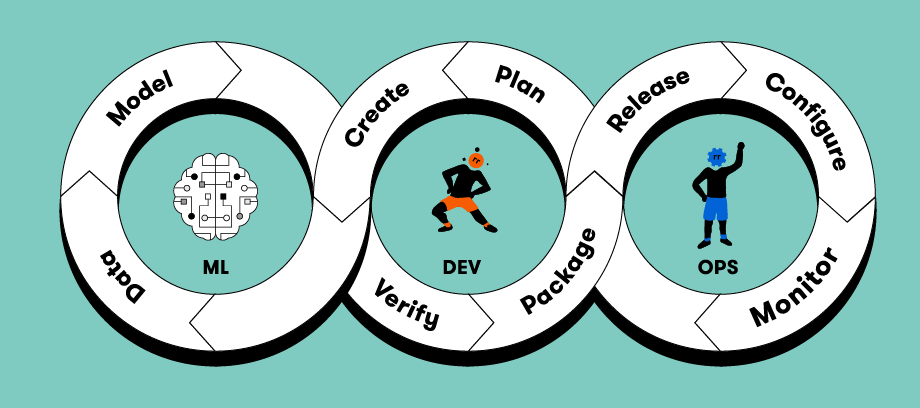
At its core, MLOps engineering is the application of DevOps principles—such as continuous integration (CI) and continuous delivery (CD)—to the machine learning lifecycle. While a standard software pipeline focuses on code, an MLOps pipeline must account for three distinct components: code, data, and models.
In a production environment, automation is no longer optional. It is the only way to ensure that as data changes, the system can automatically retrain, validate, and redeploy models without manual intervention. By treating the entire ML workflow as a programmable infrastructure, MLOps engineers ensure consistency, reproducibility, and high availability.
Why MLOps Engineers Are in High Demand
As AI transitions from a competitive advantage to a business requirement, enterprises are finding that their biggest bottleneck is not a lack of algorithms, but a lack of operational infrastructure. There is a massive industry gap for engineers who understand how to design pipelines that survive in the wild.
Hiring trends show that organizations are shifting focus from hiring pure "research" data scientists to looking for "production-focused" MLOps engineers. Companies need professionals who can handle the end-to-end orchestration of models, from ingestion to inference, ensuring that AI investments deliver actual ROI rather than sitting in a development queue.
About Certified MLOps Engineer Certification
The Certified MLOps Engineer credential is designed to fill the technical void between software engineering and data science. It is a mid-level certification that emphasizes hands-on mastery of the tools that power modern AI backbones. Rather than focusing on theoretical research, this certification forces a deep dive into the operational realities of building, testing, and monitoring models at scale.
Certification Ecosystem Comparison
| Certification | Level | Focus Area | Best For | Skills Covered | Career Value |
| MLOps Foundation | Entry | Concepts/Principles | Beginners | High-level MLOps workflow | Foundational knowledge |
| Certified MLOps Engineer | Mid | Implementation/Ops | Engineers | CI/CD, Kubernetes, Serving | High (Direct Hires) |
| Certified MLOps Professional | Senior | Strategy/Governance | Lead Engineers | Scalability & Compliance | Leadership paths |
| Certified MLOps Architect | Expert | System Design | Architects | Enterprise Infrastructure | C-suite/Head of AI |
Core Skills Covered in Certified MLOps Engineer
The certification curriculum is built on the reality that an MLOps engineer is primarily an infrastructure specialist.
CI/CD for Machine Learning Pipelines Engineers master the art of automated gates. This includes setting up triggers where a code commit or a change in data triggers a full retraining cycle. Using tools like GitHub Actions or GitLab CI, these pipelines validate data quality and model performance before any code is promoted to production.
Model Serving and Infrastructure Moving models into production requires highly available endpoints. The program covers deploying models via REST/gRPC using robust serving layers like Triton Inference Server or TorchServe, ensuring that sub-millisecond latency is maintained even as request volume spikes.
Containerization and Orchestration Understanding the deployment environment is critical. This module focuses on Dockerizing ML models and managing their lifecycle using Kubernetes. You learn how to handle GPU scheduling and auto-scaling configurations, ensuring that expensive compute resources are utilized efficiently.
Monitoring and Drift Detection A deployed model is never "finished." You learn to implement observability stacks that monitor for data drift and concept drift, automatically triggering alerts or retraining workflows when the model’s predictive accuracy begins to degrade.
Real-World MLOps Engineering Use Cases
- Recommendation Systems: Managing real-time feature updates so users see content based on their most recent clicks.
- Fraud Detection: Deploying low-latency inference systems that process millions of transactions per hour with continuous monitoring for shifts in fraud patterns.
- Scalable AI Platforms: Building internal platforms where data scientists can push models to production safely without needing to understand the underlying Kubernetes configuration.
Career Growth in MLOps Engineering
An MLOps Engineer sits at the center of the modern data stack. The career progression is clear: moving from an MLOps Engineer into specialized roles like Platform Engineer or AI Infrastructure Architect. As AI becomes embedded in all software, the ability to manage the machine learning lifecycle becomes a force multiplier for any engineering career. Unlike static roles, MLOps is constantly evolving alongside cloud-native technologies, keeping your skill set permanently in demand.
MLOps Engineering vs Traditional ML Workflow
- Manual Pipelines: Often lead to "model rot," where outdated models provide poor predictions because they were never retrained on fresh data.
- Research vs. Production: While researchers optimize for accuracy on a static set, MLOps engineers optimize for reliability, reproducibility, and system uptime.
- Evolving Systems: MLOps shifts the focus from "creating a model" to "creating a system that creates and maintains models."
Challenges Solved by MLOps Engineering
- Deployment Failures: Automated testing ensures that only stable models reach production.
- Scaling Issues: Kubernetes-native orchestration ensures that inference endpoints scale horizontally based on demand.
- Inconsistencies: Feature stores ensure that the data used during training is mathematically identical to the data used at the time of inference.
Future of MLOps Engineering
The industry is moving toward fully automated ML lifecycles, where AutoML and MLOps converge. The future lies in cloud-native infrastructure—leveraging serverless computing and custom Kubernetes operators to minimize the "ops" work, allowing engineers to focus on higher-level architecture and system design.
Who Should Take This Certification
- ML Engineers: Looking to bridge the gap from training models to deploying them effectively.
- Data Engineers: Wanting to leverage their data pipeline expertise into the specialized field of ML.
- Backend/DevOps Engineers: Seeking to specialize in the high-growth niche of AI infrastructure.
Frequently Asked Questions
Is programming experience required for this certification?
Yes. You should be comfortable with Python for pipeline development and YAML for configuration management.
Does this certification focus on a specific cloud provider?
No, it is cloud-agnostic. The focus is on universal tools like Docker and Kubernetes that work across AWS, GCP, and Azure.
How does this differ from the MLOps Foundation certification?
Foundation is theoretical and conceptual, whereas this certification is implementation-focused, requiring you to build and troubleshoot actual infrastructure.
What is the value of the capstone project?
The capstone is a peer-reviewed, end-to-end project that demonstrates you can integrate all the modules into a functional system.
Are there practical exam components?
Yes, the exam includes scenario-based problems where you must diagnose and solve production issues, testing your applied skills.
Conclusion
The path to reliable AI leads directly through MLOps engineering. As production systems increase in complexity, the ability to automate the lifecycle of a model—from data ingestion to serving and monitoring—is no longer a luxury; it is a professional mandate. By gaining deep, hands-on experience through the Certified MLOps Engineer program, you position yourself not just as a participant in the AI revolution but as the engineer who builds the infrastructure that makes it possible. In an industry where models are many but production systems are few, your expertise will remain a top-tier asset for years to come.
