Site Reliability Engineering Certified Professional: Build Reliability in Modern Cloud Systems
Introduction
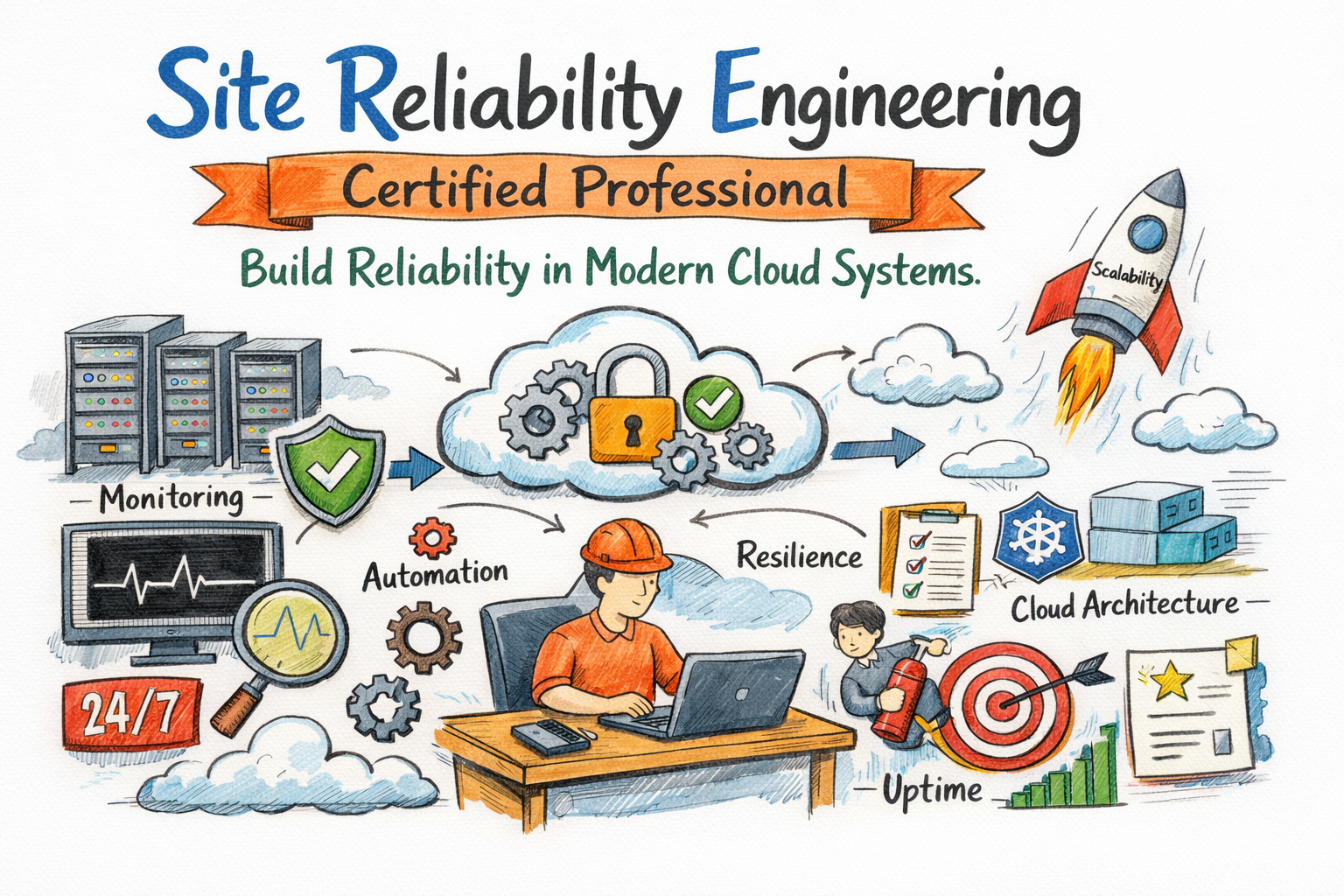
Modern digital platforms require highly reliable infrastructure and stable applications to serve millions of users without downtime. This is where Site Reliability Engineering (SRE) becomes essential. SRE combines software engineering practices with IT operations to build scalable, resilient, and reliable systems. The Site Reliability Engineering Certified Professional (SRECP) program offered by DevOpsSchool is designed to help professionals understand SRE concepts, reliability strategies, and automation practices used in modern cloud environments. The certification provides practical knowledge and hands-on experience that helps engineers manage complex systems effectively.
What is Site Reliability Engineering (SRE)?
Site Reliability Engineering is a discipline that applies software engineering approaches to infrastructure and operations problems in order to build reliable and scalable systems. The goal of SRE is to ensure that services remain highly available while maintaining development speed and operational efficiency.
Key objectives of SRE include:
- Improving system reliability and performance
- Automating operational tasks and infrastructure management
- Monitoring services and preventing downtime
- Managing incidents and improving system recovery processes
SRE practices are widely used by modern technology companies that operate large-scale distributed systems and cloud platforms.
What is the Site Reliability Engineering Certified Professional (SRECP)?
The Site Reliability Engineering Certified Professional (SRECP) certification is a specialized program that teaches engineers how to implement SRE practices in real-world environments. It focuses on reliability engineering, monitoring, service level management, and automation strategies used in modern software operations. This certification program helps professionals understand how to maintain system reliability while supporting continuous development and deployment.
Key topics covered in the certification include:
- Service Level Indicators (SLIs) and Service Level Objectives (SLOs)
- Error budgets and reliability management
- Incident response and troubleshooting techniques
- Monitoring, observability, and performance optimization
These concepts help organizations balance system stability with rapid innovation.
Skills You Will Learn in SRECP
The certification focuses on practical skills that are essential for engineers working in cloud infrastructure and DevOps environments. The program provides both theoretical understanding and real-world implementation strategies.
Some of the core skills include:
- Designing reliable and scalable cloud systems
- Implementing monitoring and observability solutions
- Managing service reliability using SLOs and SLIs
- Automating infrastructure and operational workflows
These capabilities allow professionals to maintain service reliability even in complex distributed environments.
Why SRE Certification is Valuable
The demand for Site Reliability Engineers has increased significantly as organizations adopt cloud-native infrastructure and large-scale distributed applications. Certified professionals with SRE knowledge are highly valued because they help maintain system performance, reliability, and scalability.
Benefits of earning SRE certification include:
- Strong career opportunities in DevOps and cloud engineering
- Higher demand for reliability engineering skills
- Ability to manage complex production systems
- Better understanding of automation and monitoring tools
Professionals with SRE expertise are often responsible for ensuring business-critical systems remain operational and efficient.
Role of DevOpsSchool in SRE Training
DevOpsSchool provides industry-focused training programs designed to help professionals learn modern DevOps, cloud computing, and reliability engineering practices. The platform focuses on practical learning through real-world projects, instructor-led training, and hands-on labs. The SRECP certification program offered by DevOpsSchool helps participants develop a strong understanding of reliability engineering concepts and apply them to real infrastructure environments.
Conclusion
Site Reliability Engineering has become a critical discipline in modern software development and cloud infrastructure management. Organizations rely on SRE professionals to maintain system reliability, reduce downtime, and ensure smooth service delivery. The Site Reliability Engineering Certified Professional (SRECP) certification provides a comprehensive learning path for engineers who want to build expertise in reliability engineering, automation, and monitoring practices. By gaining these skills, professionals can play a key role in building stable, scalable, and efficient technology systems.
