Enterprise AIOps Transformation: Why Certified AIOps Professional Matters for IT Careers
Introduction: Why Enterprise IT Operations Is Reaching a Breaking Point
Modern enterprise IT environments are no longer simple or centralized. They are distributed across cloud platforms, microservices architectures, container ecosystems, and hybrid infrastructures that generate massive volumes of operational data every second. While this evolution has improved scalability and agility, it has also introduced a critical challenge: operational overload.
IT operations teams today are struggling with alert fatigue, where thousands of alerts are generated across monitoring tools, most of them redundant or non-actionable. Alongside this, the exponential growth of logs, metrics, and traces has made it nearly impossible for human teams to manually identify root causes in real time. Traditional IT operations models, which rely heavily on manual monitoring, ticketing systems, and reactive incident resolution, are no longer effective at enterprise scale.
This complexity is exactly why AIOps has become a strategic necessity. Artificial Intelligence for IT Operations introduces machine learning, automation, and predictive analytics into IT systems, enabling organizations to move from reactive firefighting to proactive and autonomous operations.
Within this transformation, the Certified AIOps Professional certification plays a crucial role in preparing professionals for leadership in AI-driven enterprise environments.
Understanding AIOps in Modern Enterprises
AIOps represents the convergence of artificial intelligence, big data analytics, and IT operations. It is designed to process and analyze large-scale operational data in real time, identify anomalies, correlate events, and automate responses to incidents.
In traditional IT operations, monitoring systems operate in silos, and engineers manually analyze logs and alerts to determine the root cause of issues. This approach becomes inefficient as systems scale. AIOps fundamentally changes this model by introducing intelligent correlation and predictive capabilities.
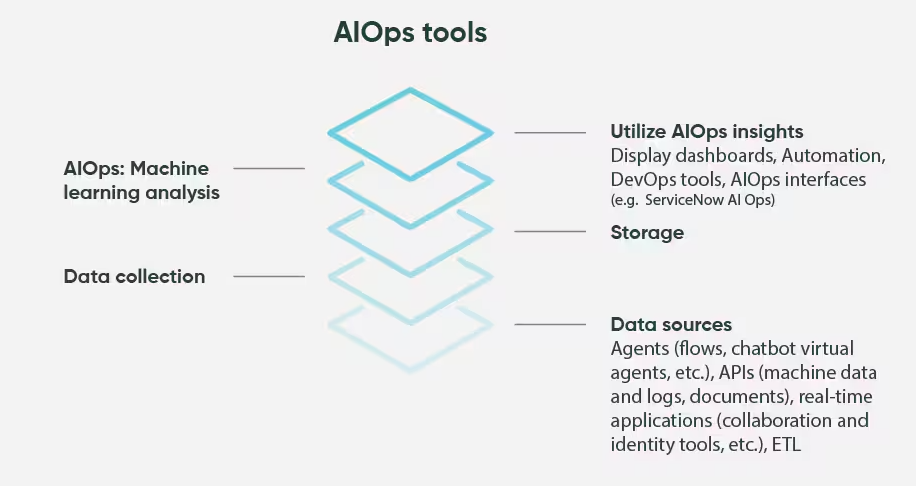
In modern enterprises, AIOps acts as an intelligence layer sitting above observability tools, DevOps pipelines, and infrastructure platforms. It enhances Site Reliability Engineering (SRE) practices by reducing noise, improving incident response times, and enabling proactive decision-making.
Organizations are increasingly integrating AIOps into their DevOps and cloud-native strategies to improve resilience and operational efficiency.
Why AIOps Professionals Are in High Demand
The global shift toward digital transformation has created a massive demand for AI-driven IT operations. Enterprises are now generating unprecedented volumes of operational data, but the ability to interpret and act on that data remains limited.
There is a significant skills gap in the industry, where organizations have adopted cloud-native technologies but lack professionals who understand how to implement AI-driven operational intelligence. This gap is driving strong demand for AIOps-skilled professionals who can bridge the divide between traditional IT operations and modern intelligent systems.
From a business perspective, AIOps delivers measurable benefits such as reduced downtime, faster incident resolution, improved system reliability, and lower operational costs. As a result, enterprises are actively investing in professionals who can lead AIOps transformation initiatives.
About the Certified AIOps Professional Certification
The Certified AIOps Professional certification is designed for professionals who want to move beyond operational execution and into strategic IT leadership roles. It focuses on building expertise in designing, implementing, and managing enterprise-scale AIOps frameworks.
Unlike entry-level certifications, this program emphasizes architecture, governance, and strategy rather than just tooling. It prepares professionals to evaluate AIOps platforms, define operational intelligence strategies, and lead enterprise-wide automation initiatives.
The certification also focuses on real-world implementation scenarios, ensuring professionals can apply AIOps concepts to solve complex enterprise challenges such as incident prediction, system optimization, and operational cost reduction.
AIOps Certification Ecosystem and Career Progression
| Certification | Level | Focus Area | Best For | Skills Covered | Career Value |
|---|---|---|---|---|---|
| AIOps Foundation | Beginner | Fundamentals | New entrants | Basic monitoring concepts | Entry-level readiness |
| Certified AIOps Engineer | Technical | Implementation | Engineers | Tooling, pipelines | Operational roles |
| Certified AIOps Manager | Mid-level | Operations leadership | Managers | Team + process management | Leadership growth |
| Certified AIOps Professional | Advanced | Strategy & architecture | Senior professionals | Governance, design, strategy | High-value leadership roles |
| Certified AIOps Architect | Expert | Enterprise architecture | Architects | System design, scalability | Executive-level impact |
This progression shows how professionals evolve from technical execution roles into strategic leadership positions within enterprise IT operations.
Key Skills Gained Through Certified AIOps Professional
Professionals who complete this certification develop a strong understanding of enterprise-level AIOps strategy, including how to design scalable operational intelligence frameworks. They gain the ability to evaluate AIOps tools based on business value rather than just technical features.
The certification also strengthens leadership capabilities, enabling professionals to guide teams in implementing AI-driven workflows and automation strategies. A key focus is placed on operational governance, ensuring that AI systems remain reliable, explainable, and aligned with enterprise goals.
Additionally, professionals learn how to measure ROI from AIOps implementations, making them valuable contributors to business decision-making processes.
Real-World Enterprise AIOps Use Cases
AIOps is widely used in enterprise environments to reduce incident response times by automatically correlating logs, metrics, and events into meaningful insights. This significantly improves root cause analysis and minimizes downtime.
Predictive operations allow organizations to identify potential system failures before they occur, enabling proactive remediation. Intelligent monitoring systems filter out noise and highlight only critical issues, reducing alert fatigue.
Automated remediation enables systems to self-heal without human intervention, while enterprise observability provides a unified view of system health across distributed environments.
Career Growth and Leadership Opportunities
Certified AIOps professionals are well-positioned for advanced career paths in IT leadership. Common roles include AIOps Architect, IT Operations Manager, Enterprise Reliability Lead, and Platform Engineering Manager.
These roles go beyond system maintenance and focus on designing enterprise-wide operational strategies. Professionals in this space are often responsible for aligning IT operations with business outcomes and driving digital transformation initiatives.
As organizations continue to adopt AI-driven operations, AIOps expertise is becoming a key requirement for senior technical leadership positions.
AIOps vs Traditional IT Operations
Traditional IT operations rely heavily on manual monitoring, reactive troubleshooting, and siloed toolsets. This approach becomes inefficient in large-scale distributed environments.
AIOps introduces predictive analytics, intelligent automation, and real-time event correlation, enabling organizations to identify and resolve issues faster. It replaces manual workflows with automated decision-making systems that scale with infrastructure complexity.
This shift represents a fundamental evolution in how IT operations are managed in modern enterprises.
Challenges Without AIOps Adoption
Organizations that do not adopt AIOps often struggle with overwhelming alert volumes that slow down incident response. Without intelligent correlation, teams spend excessive time identifying root causes.
Visibility across distributed systems becomes limited, making it difficult to understand system health in real time. As infrastructure scales, operational inefficiencies increase, leading to higher costs and reduced system reliability.
Future of AIOps and Enterprise Automation
The future of AIOps is moving toward fully autonomous IT operations, where systems can self-diagnose and self-heal without human intervention. AI-assisted decision-making will become a standard part of enterprise operations.
Intelligent observability will unify logs, metrics, and traces into a single AI-driven intelligence layer. Platform engineering will increasingly integrate AIOps directly into infrastructure and deployment pipelines, making intelligent operations a built-in capability rather than an add-on.
Who Should Pursue This Certification
This certification is ideal for DevOps engineers, SREs, IT managers, platform engineers, enterprise architects, cloud professionals, and operations leaders. It is particularly valuable for professionals who want to transition into strategic IT leadership roles focused on automation and AI-driven operations.
FAQs
What is the Certified AIOps Professional certification?
It is an advanced certification focused on enterprise AIOps strategy, architecture, and implementation.
Who should pursue this certification?
IT professionals aiming for leadership roles in AI-driven IT operations.Is coding required for AIOps roles?
Basic technical understanding helps, but focus is more on strategy and architecture.
How does AIOps improve IT operations?
It reduces incidents, improves automation, and enables predictive monitoring.
Does AIOps replace DevOps?
No, AIOps enhances DevOps by adding intelligence and automation.
What skills are needed for AIOps?
Monitoring, automation, cloud systems, and basic understanding of AI concepts.
Is AIOps relevant for cloud careers?
Yes, it is essential in modern cloud-native and hybrid environments.
Conclusion
The Certified AIOps Professional certification represents a strategic pathway into the future of enterprise IT operations. As organizations move toward AI-driven systems, professionals who understand AIOps will play a critical role in ensuring system reliability, efficiency, and scalability.
This certification is not just about technical knowledge—it is about developing the ability to lead enterprise transformation in IT operations. It prepares professionals for high-impact roles where decision-making, automation, and strategy intersect.
