Future-Proof Your Career with DevSecOps Certified Professional (DSOCP)
Gemini said
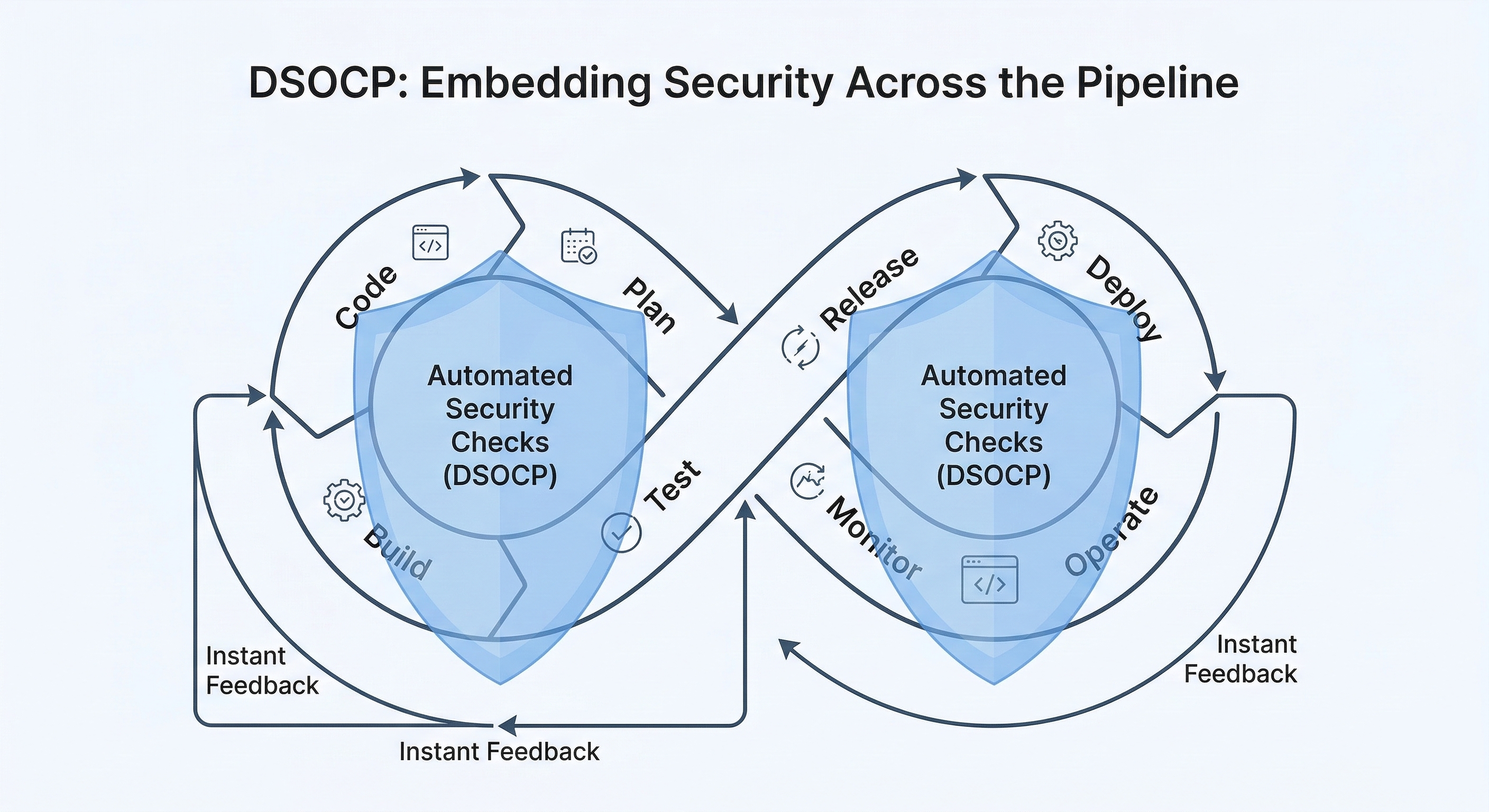
In the early days of software development, security was often viewed as a "gatekeeper"—a final, often frustrating hurdle at the end of a release cycle. Developers would build at breakneck speed, operations would prepare the infrastructure, and then, days before a go-live, the security team would swoop in with a 200-page vulnerability report. This friction didn't just delay releases; it created a culture of "us versus them" that hindered innovation and left systems vulnerable.Fast forward to today, and the landscape has changed. With the rise of cloud-native architectures, microservices, and CI/CD pipelines, the old "perimeter-based" security model is obsolete. Security can no longer be a standalone phase. It must be woven into the very fabric of the development lifecycle. This is the essence of DevSecOps—the "Shift Left" movement.However, moving from theory to practice requires more than just an understanding of the acronym. It requires a rigorous, technical, and strategic framework. This is where the DevSecOps Certified Professional (DSOCP) comes into play. As organizations globally struggle to balance speed with safety, this certification has emerged as the gold standard for engineers and managers who want to master the art of secure automation.
The Critical Importance of Specialized DevSecOps Training
The industry is currently facing a "Security Debt" crisis. Most engineering teams are proficient in Docker, Kubernetes, and Jenkins, but few have mastered the integration of automated security scanning within those tools. Relying on manual audits in a world of daily deployments is a recipe for disaster.The DevSecOps Certified Professional (DSOCP) Certification course isn't just a certification; it is a holistic deep dive into the engineering practices that protect modern enterprises. It addresses the fundamental question: How do we empower developers to write secure code without slowing them down? By standardizing the knowledge of Security-as-Code, the DSOCP ensures that security is a shared responsibility, not a siloed task.
At a Glance: The DSOCP Certification Landscape
To understand where this course fits into your professional trajectory, let’s look at the core components compared to traditional security roles.
A Detailed Exploration of the DSOCP Course and Its Benefits
The DevSecOps Certified Professional (DSOCP) curriculum is designed to bridge the gap between development, operations, and security. It moves beyond the high-level "why" and dives deep into the "how."
1. The Mastery of Integrated Tooling
The course covers the entire spectrum of security automation. Students don't just learn about vulnerabilities; they learn how to catch them automatically.
- SAST (Static Application Security Testing): Analyzing source code for security flaws before the code is even executed.
- DAST (Dynamic Application Security Testing): Testing the application in its running state to find vulnerabilities that only appear during execution.
- SCA (Software Composition Analysis): Given that 80-90% of modern codebases consist of open-source libraries, mastering SCA to find vulnerabilities in dependencies is a core pillar of the DSOCP.
2. Infrastructure as Code (IaC) Security
In a cloud-native world, infrastructure is code. The DSOCP teaches you how to secure Terraform scripts, CloudFormation templates, and Ansible playbooks. By scanning these templates for misconfigurations (like open S3 buckets or insecure SSH ports) before they are deployed, you prevent breaches before the infrastructure even exists.
3. Compliance as Code
For managers and engineers in highly regulated industries (Finance, Healthcare, Govt), compliance is a constant headache. The DSOCP provides frameworks for automating compliance audits, turning what used to be a month-long manual process into a continuous, real-time dashboard.
4. Cultural Transformation
Perhaps the most significant benefit is the shift in mindset. The course teaches engineers how to act as "Security Champions" within their dev teams, fostering a culture where security is seen as a feature, not a bug.
Why DevOpsSchool? The Provider’s Credibility
When choosing a certification provider, the pedigree of the instructors and the quality of the lab environment are paramount. DevOpsSchool has established itself as a premier destination for high-end technical training for several reasons:
- Real-World Practitioners: The trainers at DevOpsSchool are not just academics; they are consultants who have worked on large-scale migrations for Fortune 500 companies. They bring "war stories" to the classroom, explaining how these tools behave in complex, messy, real-world environments.
- Hands-on Lab Focus: Theory is cheap; implementation is expensive. DevOpsSchool provides robust, cloud-based lab environments where students can practice breaking and fixing pipelines in real-time.
- Global Recognition: With a massive alumni network spanning India, the US, Europe, and the Middle East, a certification from DevOpsSchool carries weight during technical interviews and salary negotiations.
- Comprehensive Support: Their commitment to the learner doesn't end with the final exam. They offer extensive resources, community forums, and career guidance that help professionals navigate the job market.
Career Benefits and Real-World Value
The ROI of the DSOCP is immediate and measurable. For the individual engineer, it moves you out of the "commodity" developer pool and into the "specialist" bracket.
For Software Engineers and SREs:
- Salary Appreciation: DevSecOps professionals consistently command 20-30% higher salaries than their pure DevOps counterparts because the skill set is rarer and more critical to the business.
- Future-Proofing: As AI-driven attacks become more common, the demand for engineers who can build "Self-Healing" and "Self-Securing" systems will only grow.
For Managers and Leads:
- Reduced Risk: A DSOCP-trained team reduces the likelihood of a catastrophic data breach, which can cost a company millions in fines and lost reputation.
- Improved Velocity: By catching bugs and security flaws early, you reduce the "rework" loop, allowing your team to ship features faster with higher confidence.
Common Mistakes in the DevSecOps Journey
Even with the best intentions, many organizations fail their DevSecOps implementation. Recognizing these pitfalls is a major component of the DSOCP mindset.The "Tool-First" FallacyThe most common mistake is assuming that buying an expensive security tool will automatically make you "DevSecOps." Tools are only as good as the processes they support. Without a culture of collaboration, a new scanner will just create more "alert fatigue" for developers.Other common pitfalls include:
- Failing to Automate: If your security check still requires a manual sign-off from a separate team for every minor release, you aren't doing DevSecOps; you're just doing DevOps with a bottleneck.
- Ignored False Positives: Over-tuning scanners can lead to hundreds of false alarms. If developers stop trusting the tool, they will find ways to bypass it.
- Neglecting the "Ops" in DevSecOps: Security is often integrated into the build (Dev), but forgotten in the runtime (Ops). Monitoring and observability are just as important as code scanning.
- Lack of Executive Buy-in: DevSecOps requires a shift in how resources are allocated. Without leadership understanding that security is a prerequisite for speed, the initiative will likely stall.
Who Should Enroll in the DSOCP Course?
This course is not an entry-level "Introduction to IT" program. It is designed for professionals who are already in the trenches and want to elevate their craft.
- DevOps Engineers: Who want to add the "Sec" to their title and master security automation.
- Software Engineers: Who want to understand how their code is deployed and how to protect it from modern threats.
- Security Professionals: Transitioning from traditional, manual security roles to automated, cloud-native environments.
- System Administrators: Moving into SRE or Platform Engineering roles where security is a core requirement.
- IT Managers & Team Leads: Who need to understand the technical roadmap of DevSecOps to lead their teams through a digital transformation.
Frequently Asked Questions (FAQs)
Q1: What are the prerequisites for the DSOCP course?While there are no strict barriers, a basic understanding of Linux, Git, and at least one cloud provider (AWS/Azure/GCP) is highly recommended. Familiarity with basic DevOps concepts like CI/CD will help you grasp the advanced modules faster.
Q2: How long does the certification take to complete?The course is intensive and designed to fit into the schedule of a working professional. Typically, the training spans several weeks of deep-dive sessions followed by a practical examination.
Q3: Is the DSOCP recognized globally?
Yes. The DSOCP is a globally recognized credential that demonstrates a high level of technical proficiency in securing modern software delivery pipelines.
Q4: Does the course cover specific tools like Jenkins or Kubernetes?
Absolutely. The DSOCP is tool-agnostic in its philosophy but highly practical in its application. You will work with industry-standard tools such as Jenkins, Docker, Kubernetes, Snyk, SonarQube, and various Vault solutions.
Q5: How does this differ from a general Security+ or CEH certification?
While certifications like CEH focus on hacking and penetration testing, the DSOCP focuses on engineering and automation. It is about building secure systems from the ground up rather than just testing them from the outside.
Conclusion: The Path Forward
In the current technological climate, standing still is the same as moving backward. The complexity of our systems is increasing, and the sophistication of threats is keeping pace. Organizations no longer have the luxury of treating security as a secondary concern.The DevSecOps Certified Professional (DSOCP) is more than just a credential on your LinkedIn profile; it is a commitment to a higher standard of engineering excellence. It provides the technical toolkit, the strategic framework, and the cultural mindset required to build the secure, resilient systems of the future.Whether you are an engineer looking to maximize your market value or a manager aiming to protect your organization's digital assets, the DSOCP is the roadmap you’ve been looking for. The transition from "DevOps" to "DevSecOps" is inevitable. The only question is whether you will be a leader in that transition or someone trying to catch up.Take the next step in your professional evolution. Explore the curriculum, engage with the community at DevOpsSchool, and secure your place in the next generation of technical leaders.